
At NEOLIFE, CSR is neither a recent topic nor a trend to follow.

It has been in our DNA since 2012: designing constructive, environmentally friendly solutions that are more sustainable, more responsible and always serve people.

At the end of 2025, our approach reached a milestone when we were awarded an EcoVadis silver medal, with a score of 73/100. This places us in the top 15% of companies assessed worldwide.

This is a first recognition that we welcome with pride… and humility.

What we have learned along the way…

To be honest, in 2024 our first EcoVadis assessment did not yield the results we had hoped for.
 00 So we rolled up our sleeves! We needed to clarify our vision, strengthen our commitments, formalise our policies, choose the right indicators…

In short: move from an intuitive approach to CSR that is fully integrated into our corporate strategy.

The following year was a busy one, with all our teams working hard to carry out fundamental structural work. This EcoVadis silver medal is recognition of our collective CSR efforts, which are firmly rooted in the long term.

From raw materials to construction sites: taking concrete action

We have always worked to support the ecological transition in the building industry by developing low-carbon, recyclable solutions based on reclaimed wood fibres. Today, all our VESTA® products are designed and manufactured in France and are certified bio-based by Karibati.

We are, of course, aware of the environmental impact of these solutions: all our cladding ranges have a verified and certified FDES (French Environmental Declaration Sheet).

This approach extends to our customers’ construction sites with NEOCOLLECT, a programme that enables the recovery and reuse of product scraps and transport crates. The result: 45 tonnes of material recovered and nearly 720 wooden crates recycled since 2024. We also plan to boost this programme with the aim of increasing the number of construction sites covered by 25% by 2030.

Keen to further reduce our footprint, we also carried out our carbon assessment in 2024, to identify new areas for action. Thanks to this assessment:

  • We recently moved into new premises, thereby reducing our electricity consumption by a factor of three.
  • We plan to gradually decarbonise our vehicle fleet, with a target of 90% electric vehicles by the end of 2027.

Above all, it’s a team effort

Performance isn’t just measured in tonnes of CO₂ avoided. At Neolife, employee wellbeing is at the heart of our business plan.

We have also launched the ‘Happiness Pack’, a set of concrete actions to improve the daily lives of our teams. These include:

  • Teleworking for all our employees,
  • Support for everyone during important moments in their lives with the Family Programme,
  • Redesigned workspaces, with a particular focus on ergonomics, user-friendliness and safety.
  • Structured integration and training programmes.
  • Salaries that satisfy 76% of employees.

We are, of course, committed to maintaining a healthy work-life balance and fostering open and respectful dialogue. We also view continuing education as a driver of performance. In 2024, 96% of employees received training in their field or in risk prevention.

What guides our choices

Ethics – Humanity – Authenticity – Shared commitment.

These values guide our daily decisions.
 00 These principles translate into structured governance, an ethical charter shared by all, risk prevention measures (corruption, data protection) and a strong commitment to transparency in our relationships.

That is why 100% of our employees are trained in integrity and corruption prevention issues.

Our responsibility extends more broadly to our entire value chain and the relationships we build with our industrial partners. Our responsible purchasing policy is based on concrete environmental, social and ethical criteria, and on the principle of local sourcing. In line with this approach, 68% of our purchases are made in the Auvergne Rhône-Alpes region, with the rest coming from Europe.

What now?

This EcoVadis silver medal marks a key milestone for us.

It recognises the progress we have already made and the very concrete acceleration we have achieved recently.

It is also a new starting point. We already have new objectives, including:

  • Obtaining PEFC certification by the end of 2026 for ourselves and our three main suppliers
  • Reducing our Scope 1 and 2 carbon footprint by 20% by 2030
  • Reducing our energy consumption per square metre of product manufactured by 20% by 2030
  • Reusing or recycling 100% of our production waste
What exactly is off-site construction?

Off-site construction involves manufacturing the main components of a building (walls, floors, complete modules) in a factory before assembling them on site. This construction method relies on management tools that make it possible to anticipate each stage, plan interventions and coordinate all trades within a single production site. Where traditional construction sites can be subject to weather conditions, schedule disruptions or compartmentalised organisation, off-site prefabrication adopts a more fluid industrial approach, with processes under constant quality control, to achieve zero defects.

In short: off-site construction enables mass production and cost control, while improving reliability, precision and overall efficiency.

According to a study conducted by the FFB, off-site projects can reduce construction costs by up to 30%, particularly through the optimisation of resources used and better management of construction time. (Source: Fédération Française du Bâtiment, 2021.)

Off-site: enhanced cooperation between stakeholders

Off-site construction is not just about changing the manufacturing location: it is a new way of designing and managing projects. Project owners, project managers, manufacturers, design offices, installation companies, etc. are involved at an earlier stage and work in a more integrated manner. This upstream cooperation makes it possible to anticipate interfaces, ensure technical feasibility and make deadlines and costs more reliable. Off-site construction thus becomes a real lever for collective performance.

More than just a construction technique, off-site building brings about a real cultural shift: designing differently, cooperating more and manufacturing buildings that are efficient, sustainable and desirable in a more sustainable way.

To learn more >> Read the Off-site Renovation Reference Guide.

Off-site construction: what are the advantages?

The construction sector remains one of the largest emitters of CO₂. However, for several years now, the entire industry has been reinventing itself and accelerating its transition towards more virtuous practices.

And off-site construction is appealing because it offers numerous advantages that are aligned with the current challenges facing the sector:

Much shorter construction times: Prefabrication allows several operations to be carried out simultaneously, reducing the time spent on site. This results in significant time savings, which is particularly useful in projects with tight schedules.

Optimised quality: Working in a workshop offers greater precision, better control over production conditions and repeatability of movements. The result: fewer defects, rework and accidents.

More peaceful and less disruptive construction sites: For both new builds and renovations, particularly on occupied sites, most of the work is carried out in the workshop, which reduces the impact on users and local residents: less noise, nuisance and dust.

A more environmentally friendly approach: Off-site construction limits travel, reduces energy consumption in the workshop, significantly reduces waste and optimises the use of resources. A sober approach that is fully aligned with environmental issues.

Modular and scalable structures: Off-site projects can be designed with a high degree of modularity. Modules can be reversible and designed for a second life, giving the structure a scalable character over time. Partitioning, decompartmentalising, transforming uses… for sustainable building occupancy.

True architectural freedom: Industrialisation and standardisation do not mean uniformity… off-site construction still allows for considerable aesthetic and design freedom.

According to a survey by Le Moniteur, nearly 80% of architects in France plan to incorporate off-site construction into their future projects. (Source: Le Moniteur, survey on the future of off-site construction, 2021).

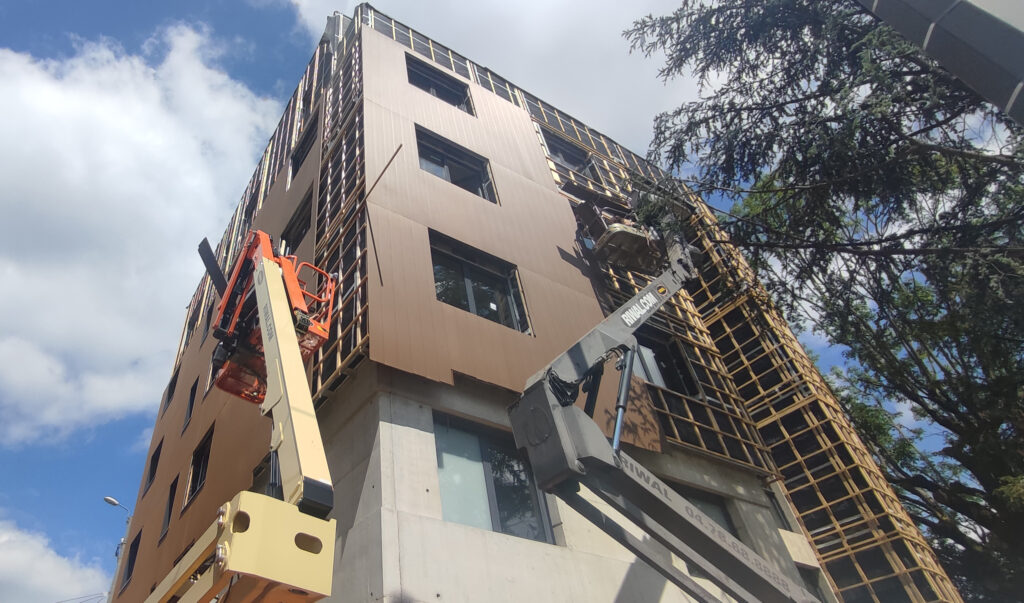
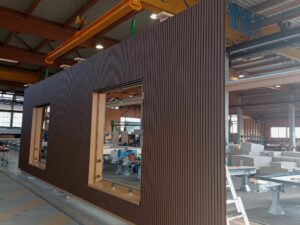
Neolife cladding - factory prefabrication

Off-site construction: for which types of structures?

Off-site prefabricated construction is currently attracting mainly players in the residential segment, but housing is not the only sector that can benefit from this type of industrial technique. In theory, any structure with regular usage patterns can benefit, including:

  • schools,
  • hotels,
  • service residences (students, seniors, etc.),
  • clinics.

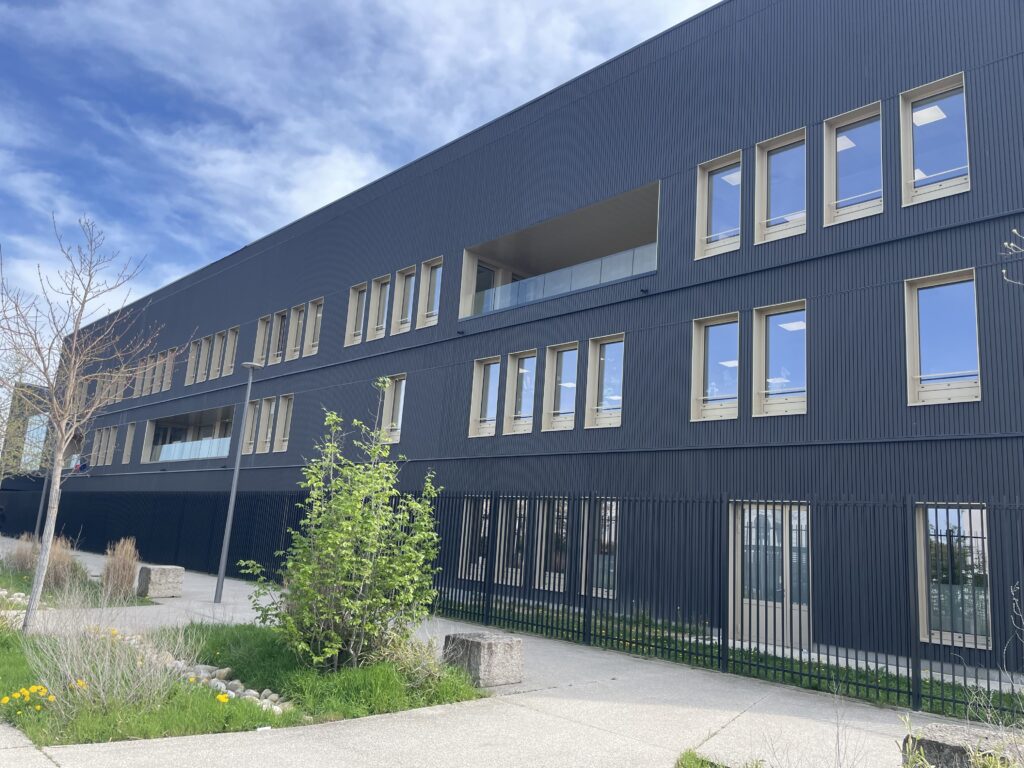
Discover an example: Construction of the Simone Veil Secondary School in Saint-Priest

Prefabrication and off-site construction could account for up to 50% of housing projects in France by 2030. due to increased demand for faster, more environmentally friendly and flexible construction. (Source: Observatoire de l’Habitat, 2023).

Factory prefabrication also meets the immense needs of energy renovation in France, particularly for prefabricated façades commonly used for external thermal insulation (ETI).

Neolife and off-site construction: a long-standing commitment

At Neolife, we are convinced that off-site construction is a concrete response to the major challenges facing the construction industry: climate emergency, need for speed of execution, demand for quality, sustainability and reversibility of uses.

As a designer of bio-based façade solutions, our mission is clear: to devise systems capable of supporting the transformation of our construction methods and to offer innovative products that combine environmental performance, ease of installation and architectural freedom.

As an active member of the Off-Site Campus, we have also been involved in the Energiesprong initiative for many years, which promotes industrial energy renovation. In 2020, we were awarded a prize for the WALLKITE project, recognition of our ability to design reliable technical solutions that are perfectly suited to the requirements of off-site prefabrication >> Read the article.

And we’re not stopping there!

In 2025, Neolife obtained the very first Technical Approval for cladding installed on timber frame façades (FOB compliant with DTU 31.4), offering new solutions to accelerate the development of off-site construction and energy-efficient building renovation.

Low-carbon cladding for off-site construction

Whether for new builds or renovations, our composite wood cladding ranges offer significant advantages for prefabricated façades manufactured in the workshop:

Precision and consistency: our blades are produced with high dimensional consistency, ensuring reliable and consistent prefabricated panels from one module to the next.

Lightweight and flexible: lightweight and easy to handle, our blades are perfectly suited to repetitive movements in the workshop as well as movements involved in lifting and transporting modules.

Quick installation: our boards are easy to install in the workshop thanks to their large width and quick and easy screw fastening.

Eco-designed and 100% recyclable material: our composite wood material is designed in a circular manner from reclaimed wood fibres, without cutting down a single tree. Scraps generated in the workshop can be recycled and reintegrated into the production chain: an approach that is fully compatible with the off-site logic.

Architectural creativity: Textures, finishes, colours… our cladding ranges are designed to unleash architects’ creativity, while complying with the technical constraints of prefabrication.


Discover our LINK range: bio-based false-clapboard cladding, particularly suited to off-site modular prefabrication.

Two new colours have been added to our colour chart for greater creativity in façade design.

Introducing

 and  

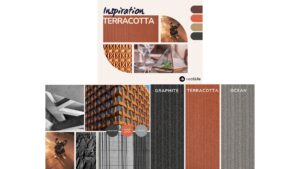
TERRACOTTA: elegant and multifaceted

Mineral, warm and deep, TERRACOTTA is inspired by the earth. and opens up multiple possibilities for contrasts on the façade. Timeless and resolutely contemporary, it brings a unique vibrancy to the material. TERRACOTTA plays with light and reveals subtle nuances that change throughout the day.

This elegant shade catches the eye and sets the tone for the space, creating new architectural lines.

Imagine TERRACOTTA in your projects:

  • Bring urban greys or raw materials to life with simplicity and modernity.
  • Combine it with woody tones for a more authentic and natural touch.
  • Mix it with mineral stones, matt golds and beiges for a soft and soothing atmosphere.
  • Express your personality with warm browns or deep blacks.

TERRACOTTA is an invitation to inspiration…

See the rest of the TERRACOTTA inspiration book


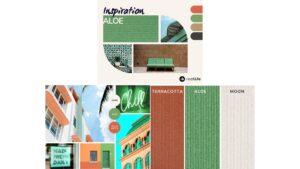
ALOE: a bold and surprising green

Mentholated, invigorating and delicately pastelised, our ALOE shade offers a beautiful energy inspired by plants. It is not a shade like any other… It breaks the mould to assert a unique identity.

ALOE certainly catches the eye, intrigues and paves the way for bold and unexpected designs.


With ALOE, design projects that are unlike any other.

A playful, graphic green that promises beautiful combinations with other colours, textures and materials. It is perfect for playing with contrasts and creating unique and unexpected stories.

  • Energise blacks, greys or raw materials for striking contrasts.
  • Combine its matt green colour with the shine of glazed ceramics.
  • Create a clean and fresh signature with mineral white.
  • Harmonise its softness with brown or terracotta tones for a warm atmosphere.

Bold, contemporary and sophisticated… ALOE will surprise you!

See the rest of the ALOE inspiration book


Your creativity, our colour chart… We can’t wait to see the projects you’ll design with these two new shades!